Malaria: Causes, Symptoms, Prevention and Treatment
Malaria is one of the most common infectious diseases in tropical regions, including Nigeria. Although malaria is preventable and curable, it can become life-threatening when diagnosis and treatment are delayed. Understanding how malaria spreads, recognizing its symptoms early, and taking preventive measures can help protect individuals, families, and communities.
What Is Malaria?
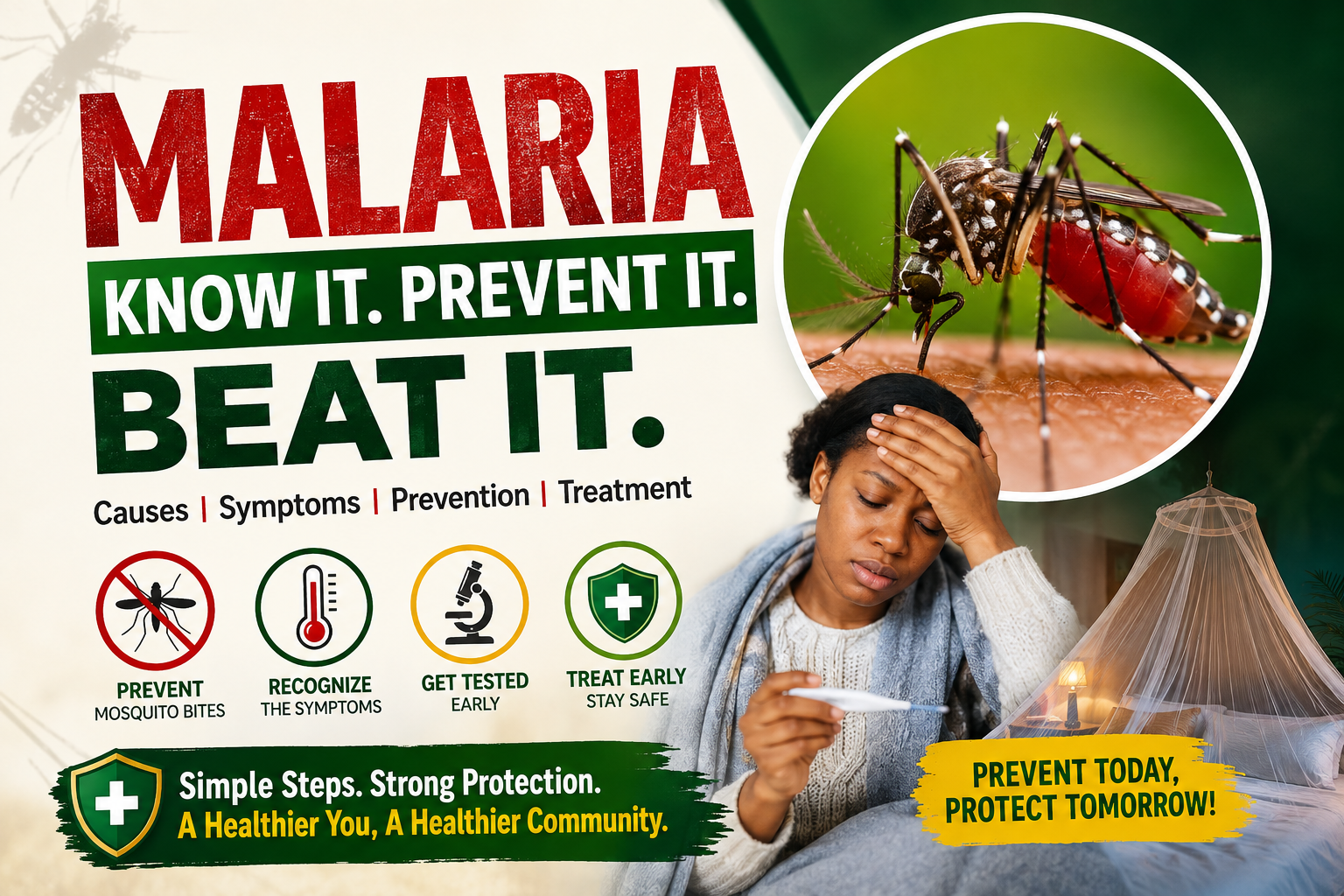
Malaria is a disease caused by Plasmodium parasites. It is mainly transmitted to humans through the bite of an infected female Anopheles mosquito. Malaria does not normally spread directly from one person to another like the common cold or flu.
The parasite Plasmodium falciparum is particularly dangerous and is the most prevalent malaria parasite in Africa. According to the World Health Organization (WHO), an estimated 282 million malaria cases and 610,000 malaria deaths occurred globally in 2024. About 95% of both cases and deaths occurred in the WHO African Region.
How Is Malaria Spread?
The malaria transmission cycle begins when an infected female Anopheles mosquito bites a person and introduces malaria parasites into the bloodstream. The parasites multiply and eventually infect red blood cells, producing the symptoms associated with malaria.
Mosquitoes are more active during the evening and at night, which is why sleeping under an insecticide-treated mosquito net is an important preventive measure.
Common Symptoms of Malaria
Malaria symptoms can initially look similar to other illnesses, making early testing important. Common symptoms include:
- Fever
- Chills
- Headache
- Muscle aches
- Weakness and tiredness
- Nausea
- Vomiting
- Sometimes diarrhoea
Symptoms commonly appear about 10–15 days after an infective mosquito bite, although the timing can vary depending on the parasite species and other factors.
Warning Signs of Severe Malaria
Untreated malaria can progress to severe disease. Warning signs may include:
- Extreme weakness or fatigue
- Confusion or impaired consciousness
- Convulsions or seizures
- Difficulty breathing
- Jaundice
- Dark or bloody urine
- Severe anaemia
- Abnormal bleeding
These symptoms require urgent medical attention. Severe malaria can cause organ failure, coma, and death.
Who Is Most at Risk?
Although anyone living in or travelling to a malaria-endemic area can become infected, some people are more vulnerable to severe malaria. These include:
- Children under five years of age
- Infants
- Pregnant women
- People with weakened immune systems
- Travellers who have not developed partial immunity to malaria
- People living in areas with intense malaria transmission
Children under five are particularly vulnerable. In 2024, they accounted for approximately three-quarters of malaria deaths in the WHO African Region.
How Is Malaria Diagnosed?
Because malaria can resemble other illnesses that cause fever, symptoms alone should not always be used to determine whether someone has malaria.
Healthcare professionals can confirm malaria through parasite-based testing, including a rapid diagnostic test or examination of a blood smear under a microscope. Early diagnosis allows appropriate treatment to begin quickly.
How Is Malaria Treated?
Malaria is treatable, but the appropriate medicine depends on factors such as the parasite species, the severity of the infection, the patient's age or weight, pregnancy status, and local drug resistance patterns.
For P. falciparum malaria, artemisinin-based combination therapies (ACTs) are among the recommended treatments.
People who suspect they have malaria should seek medical care and testing rather than relying on self-medication. Completing the prescribed treatment is also important because inadequate treatment can contribute to treatment failure and drug resistance.
How Can You Prevent Malaria?
Prevention remains one of the most effective ways to reduce malaria infections.
1. Sleep Under an Insecticide-Treated Net
Use an insecticide-treated mosquito net when sleeping, particularly in areas where malaria transmission is common. These nets help prevent mosquito bites and can reduce malaria transmission.
2. Reduce Mosquito Breeding Sites
Mosquitoes can breed in stagnant water. Keep surroundings clean and remove unnecessary containers, tyres, cans, and other objects that can collect water.
3. Use Appropriate Mosquito Protection
Where appropriate, use mosquito repellents, protective clothing, window screens, and other measures that reduce mosquito bites.
4. Consider Preventive Medicines When Recommended
Certain groups may benefit from malaria preventive medicines under appropriate medical guidance. Preventive treatment strategies are particularly important for vulnerable populations and travellers going to malaria-endemic areas.
5. Seek Testing When You Develop Symptoms
A fever should not automatically be assumed to be malaria. If you develop symptoms suggestive of malaria, particularly in an area where malaria is common, seek medical evaluation and appropriate testing.
Malaria During Pregnancy
Malaria during pregnancy can be particularly dangerous for both mother and baby. Infection can contribute to serious complications, including premature delivery and low birth weight. Pregnant women living in or travelling to malaria-endemic areas should speak with a qualified healthcare professional about appropriate malaria prevention and treatment.
Malaria Prevention Is Everyone's Responsibility
Fighting malaria requires more than treating people after they become sick. Families and communities can contribute by using mosquito nets, reducing mosquito breeding areas, supporting environmental sanitation, seeking early diagnosis, and following healthcare professionals' treatment recommendations.
Final Thoughts
Malaria remains a major public health challenge, particularly in Africa, but it is preventable, diagnosable, and treatable. Early recognition of symptoms, prompt testing, appropriate treatment, and consistent mosquito-bite prevention can save lives.
Don't ignore a persistent fever or other symptoms that could indicate malaria. Get tested, seek professional medical advice, and take prevention seriously.
Health reminder: This article is for general health education and does not replace professional medical advice. If you or a child has symptoms of malaria—especially severe symptoms—seek medical care promptly.
Sources
- World Health Organization (WHO), Malaria and World Malaria Report 2025.
- Centers for Disease Control and Prevention (CDC), Symptoms of Malaria and About Malaria.

Leave a comment
Your email address will not be published. Required fields are marked *